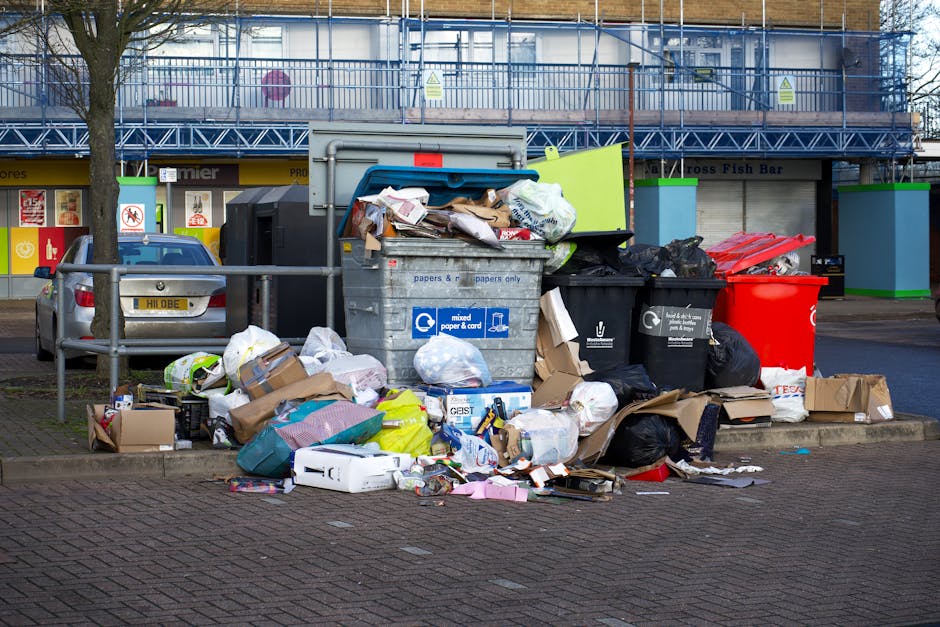
Brixton Market rubbish removal guide Lambeth
Trying to clear rubbish around Brixton Market can feel straightforward at first. Then the bags stack up, the corridor gets narrow, and you realise a simple tidy-up has turned into a proper logistics job. This Brixton Market rubbish removal guide Lambeth is here to make that job easier. Whether you are a trader, a landlord, a flat owner, or just dealing with the aftermath of a busy week, the aim is the same: remove waste safely, keep disruption low, and avoid the sort of mistakes that can lead to fines, complaints, or just unnecessary stress.
Brixton is lively, busy, and full of mixed-use spaces, so waste clearance here is never just about lifting a few black sacks. You often have access issues, timing constraints, shared entrances, food waste, bulky items, and the usual London parking realities. Let's face it, that matters. The right approach saves time, keeps the site tidy, and makes the whole process feel far less chaotic.
Below you will find a practical, human guide to what rubbish removal in this part of Lambeth actually involves, how to plan it, what to avoid, and which services are typically most useful depending on the type of waste you need cleared.
Table of Contents
- Why Brixton Market rubbish removal guide Lambeth Matters
- How Brixton Market rubbish removal guide Lambeth Works
- Key Benefits and Practical Advantages
- Who This Is For and When It Makes Sense
- Step-by-Step Guidance
- Expert Tips for Better Results
- Common Mistakes to Avoid
- Tools, Resources and Recommendations
- Law, Compliance, Standards, or Best Practice
- Options, Methods, or Comparison Table
- Case Study or Real-World Example
- Practical Checklist
- Conclusion
- Frequently Asked Questions
Why Brixton Market rubbish removal guide Lambeth Matters
Waste around Brixton Market is different from a typical suburban clear-out. The area is dense, busy, and often awkward for collection vehicles. On a good day, you are dealing with foot traffic, loading restrictions, and tight time windows. On a bad day, there is a queue of deliveries, a blocked passage, and a pile of mixed waste sitting where it really should not be.
That is why a location-specific approach matters. In and around Brixton Market, rubbish removal has to be planned with access, timing, and neighbour impact in mind. You are not just disposing of items. You are managing the flow of a busy commercial and residential environment.
The practical reasons are easy to understand:
- Shared spaces fill up quickly. Even a small amount of waste can create an obstacle when corridors, back yards, and service entrances are already compact.
- Commercial visibility is high. Traders and customers notice clutter, and so do landlords, building managers, and neighbouring businesses.
- Food-related waste can become a hygiene issue fast. Around a market setting, delays make smells, pests, and contamination more likely.
- Bulky items are awkward in central areas. Old fridges, broken shelving, sofas, or packaging materials are much harder to move without a plan.
It is also worth saying that rubbish removal in Brixton is often tied to wider property management. A flat clearance, an office clearance, or a shop refit can all generate waste that needs sorting before it becomes a bigger problem. If you are planning a larger clear-out, services such as flat clearance, office clearance, or house clearance may be more relevant than a one-off bag collection.
How Brixton Market rubbish removal guide Lambeth Works
In practice, rubbish removal near Brixton Market usually follows a pretty simple chain of events: assess the waste, separate what can be kept or recycled, plan the lift, and remove everything in one efficient visit. The difference between a smooth job and a messy one is often preparation.
For a typical clearance, the process often looks like this:
- Identify the waste type. Is it general rubbish, packaging, old furniture, food waste, mixed commercial waste, or something more specialist?
- Check access and timing. Can a vehicle get close? Is there a narrow stairwell, shared entrance, or a time restriction to work around?
- Sort items before collection. Keeping recyclables, reusable goods, and restricted items apart makes collection simpler.
- Choose the right removal method. A small load might suit a compact collection, while a bigger clear-out may need a full waste removal service.
- Load and clear responsibly. Items should be handled safely, with any special waste separated and managed properly.
For some readers, skip hire will be the obvious comparison. For others, a man-and-van style clearance is easier because the waste is taken away for you. If you want to understand what can and cannot go into a skip, the page on what can go in a skip is a useful starting point. Still, in a tightly packed place like Brixton Market, skip access is not always the neatest option, and that is where a direct collection can save a lot of hassle.
There is no magic to it. Good rubbish removal is mostly common sense, done properly.
Key Benefits and Practical Advantages
The biggest advantage of professional rubbish removal in this part of Lambeth is that it reduces friction. That sounds a bit dry, but it is true. Fewer awkward lifts, fewer back-and-forth trips, fewer bins overflowing behind the building. Everything gets simpler when the waste is handled in one go.
- Cleaner premises. A tidier market stall, shopfront, flat, or office instantly looks more professional.
- Less disruption. Coordinated removal means less time blocking hallways, loading areas, or customer entrances.
- Better recycling outcomes. When waste is sorted properly, more material can be diverted from landfill.
- Safer handling. Heavy, sharp, or awkward items are less likely to cause damage or injury when moved by experienced crews.
- More predictable planning. You can schedule the work around trading hours, tenant access, or building rules.
For businesses, that can mean fewer interruptions to service. For residents, it means less mess on stairwells and fewer arguments with neighbours about whose rubbish is whose. Small thing? Maybe. But it makes a big difference on the day.
If your waste is a mix of furniture, appliances, or office items, useful supporting services include furniture disposal, fridge and appliance removal, and confidential shredding. Those links are worth keeping in mind if the job is not just "rubbish" in the loose sense.
Who This Is For and When It Makes Sense
This guide is for anyone dealing with waste near Brixton Market and trying to figure out the cleanest, least stressful way to get rid of it. That could be a trader clearing stockroom clutter, a landlord preparing a property, a cafe owner disposing of back-of-house waste, or a resident emptying a flat after a tenancy change.
It makes sense when:
- you have more waste than the bins can handle;
- you need heavy or bulky items moved;
- the waste is sitting in a shared or visible area;
- you want to avoid multiple trips to a tip or recycling point;
- you need the job done quickly and with minimal disruption.
Some common scenarios come up again and again. A market unit replaces shelving and cardboard floods the back area. A flat above a shop needs a loft cleared. A small office near the market shuts, and desks, chairs, and paperwork need to go. In those cases, it is often better to use a service designed for mixed loads, such as business waste removal, loft clearance, or home clearance.
To be fair, people often wait too long. The pile becomes "just manageable" for a week or two, and then suddenly it is in everyone's way. That is usually the point at which a proper clearance stops being optional.
Step-by-Step Guidance
If you want the process to run smoothly, treat it like a small project rather than a last-minute scramble. Here is a practical way to approach it.
1. Walk the space first
Look at the waste in context. Is it inside a flat, behind a stall, in a basement, or in a storage room? Can it be carried out easily, or will it need dismantling? A quick visual check saves a lot of guessing later.
2. Separate the waste by type
Group items into simple categories: general rubbish, cardboard and packaging, furniture, appliances, and any specialist waste. If you have sharp items, liquids, or anything potentially hazardous, do not mix them with ordinary waste.
3. Remove anything reusable or sensitive
Sometimes there is a little moment where you realise the old shelf is still fine, or the paperwork should have been destroyed separately. Take those items out before collection day. It sounds obvious, but it is exactly the kind of thing people forget when they are tired.
4. Measure access and flag obstacles
Stairs, narrow doorways, low railings, and loading restrictions all affect the job. If the team knows in advance, they can bring the right equipment and plan the load order more efficiently.
5. Choose the right service level
For bulky household items, a furniture-focused service may be best. For construction debris or strip-out waste, builders' clearance is usually more suitable. For a general mixed load, standard waste removal is the broadest fit. You can also explore builders waste clearance if your waste comes from refurbishment or repair work.
6. Confirm what should not be included
Some items need special handling. This includes certain chemicals, oily materials, and other restricted waste. If you are unsure, ask before the job starts rather than hoping for the best. Hope is not a waste plan, unfortunately.
7. Book with a realistic time window
In a busy area like Brixton, timing matters. Allow enough room for access, loading, and unexpected delays. A clean, calm collection is better than a rushed one.
Expert Tips for Better Results
The best results usually come from a few small habits rather than one big trick. In our experience, the following make the biggest difference.
- Keep the route clear before the crew arrives. It sounds basic, but clearing hallways and front access points cuts down on mess and delays.
- Break down bulky items if safe to do so. Flat-pack furniture, disassembled shelving, and compacted cardboard are easier to move.
- Use clear labels for mixed waste. If you are managing a shop, flat, or office, a few labels prevent "useful junk" from being dumped accidentally.
- Plan around trading peaks. Early mornings or quieter windows are often much easier than midday around market traffic.
- Think about recycling before collection day. Keeping cardboard, metal, and reusable furniture separate can improve disposal efficiency.
A small but useful point: photos help. A couple of quick pictures of the waste pile, access route, and any awkward items can make planning far more accurate. You do not need to stage anything. Just real-life photos, slightly messy and all. That is usually enough.
If the load includes beds, sofas, or white goods, it is worth checking the dedicated service pages for the exact item type. For example, mattress and sofa disposal is useful for bulky soft furnishings, while fridge and appliance removal helps when old electricals are involved.
Common Mistakes to Avoid
Most rubbish removal problems are avoidable. Usually the issue is not the waste itself, but the assumptions made before the removal starts.
- Leaving the waste unsorted. Mixed loads take longer and can create avoidable handling problems.
- Underestimating access issues. Brixton streets and buildings are not always friendly to big vehicles or bulky lifting.
- Ignoring restricted waste. Hazardous or specialist items should never be treated like normal rubbish.
- Waiting until the waste blocks the space. Once the pile is in the way, the job becomes more stressful for everyone.
- Choosing the wrong service for the waste type. A sofa, a bath panel, and a load of renovation rubble are not the same thing.
Another common mistake is forgetting about responsibility after the collection. Businesses, in particular, should keep records and confirm that waste is handled properly. If you are operating in a commercial setting, a reputable approach to business waste removal is far more reassuring than an improvised arrangement with no paperwork or clarity.
Truth be told, the cheapest-looking option is not always the cheapest once you factor in delays, mess, and second visits. That is not dramatic. It is just how waste jobs often go.
Tools, Resources and Recommendations
You do not need a van full of equipment to organise a good clearance, but a few simple tools help.
- Heavy-duty sacks and boxes for separating lighter waste.
- Gloves and closed footwear if you are shifting items yourself.
- Tape, labels, or marker pens to identify what stays and what goes.
- A phone camera for recording the waste area before booking.
- Basic measuring tape for checking stairs, lifts, and doorway widths.
When comparing service options, it can help to review a few internal resources first. The most relevant ones for this topic are waste removal, pricing and quotes, and recycling and sustainability. Those pages give you a better sense of how disposal is approached, what to expect from a quote, and how recycling considerations fit into the process.
For larger property clearances, these can also be helpful depending on the situation: garage clearance, garden clearance, and house clearance. They are not just service pages; they help you map the waste to the right kind of removal.
Law, Compliance, Standards, or Best Practice
Waste removal in the UK has a compliance side, and while this guide is not legal advice, it is worth being careful. If you produce waste through a business, you should be confident it is transferred and handled properly. In everyday terms, that means using a service that takes responsibility seriously, avoids fly-tipping, and can explain how waste is managed.
For householders, the main practical point is simpler: do not leave waste where it creates an obstruction, a hygiene problem, or a safety risk. In a busy area like Brixton Market, this matters even more because the space is shared and movement is constant.
Best practice usually includes:
- keeping waste separated where practical;
- identifying anything hazardous before collection;
- choosing a provider that is transparent about handling and disposal;
- making sure access arrangements are safe for workers and the public;
- avoiding informal disposal arrangements that cannot be verified later.
If you are dealing with sensitive papers, the safest course is to use a proper confidential shredding option rather than putting documents in general waste. And if any item may be hazardous, the page on hazardous waste disposal is the place to check first. No one wants a simple clearance to become a safety headache.
Options, Methods, or Comparison Table
When people ask how to clear rubbish near Brixton Market, they are usually weighing up three main approaches: do it themselves, use skip hire, or book a direct removal service. The right choice depends on access, amount, urgency, and item type.
| Method | Best for | Pros | Limitations |
|---|---|---|---|
| DIY tip run | Small loads, loose timing, simple waste | May suit very small amounts if you already have transport | Time-consuming, parking and loading hassle, multiple trips |
| Skip hire | Ongoing projects, predictable access, mixed building waste | Good for larger volumes and self-paced loading | Needs space, can be awkward near busy streets, may not suit tight access |
| Direct rubbish removal | Bulky items, mixed loads, busy locations, fast clearances | Usually quicker, less lifting for you, better for awkward access | Needs good communication about waste type and volume |
If you are unsure about skip contents, the resource on what can go in a skip is helpful. If the job is more about taking the waste away quickly than filling a container over time, a direct waste removal service is often the more convenient route.
Case Study or Real-World Example
Here is a realistic example. A small food trader near Brixton Market has spent months storing broken shelving, old packaging, a few damaged crates, and several bags of mixed back-room waste. Nothing dramatic. Just the sort of clutter that slowly eats space. By the time they decide to deal with it, the stockroom door barely opens without a nudge.
Instead of tackling it in bits and pieces, they sort the waste into three groups: cardboard and packaging, bulky fixtures, and items that need special handling. Photos are taken, access is checked, and the collection is booked for a quiet morning slot before trading picks up. On the day, the removal is fast because the route is clear and the waste is ready.
The main lesson? The job got easier because the owner stopped treating it like "bits and bobs" and started treating it like a proper clear-out. Not glamorous, but effective. That is usually how it goes.
For a different scenario, think about a flat above a shop where tenants are moving out. A mix of furniture, bagged rubbish, and a couple of old appliances needs clearing before cleaning can start. In that case, flat clearance and furniture clearance are more suitable than trying to cobble together several separate removals.
Practical Checklist
Use this before booking or attempting a clearance yourself.
- Have I identified the waste type?
- Have I separated reusable, recyclable, and restricted items?
- Is access clear for lifting and collection?
- Do I know whether any item is hazardous or specialist waste?
- Have I checked whether furniture, appliances, or documents need dedicated handling?
- Is the collection time realistic for the location?
- Do I have photos ready if the waste pile is hard to describe?
- Have I confirmed whether I need builders waste clearance, office clearance, or general removal?
- Have I considered whether recycling or reuse is possible before disposal?
- Am I clear on the next step if the load changes on the day?
If you can tick most of those off, you are already ahead of the game.
Conclusion
Brixton Market rubbish removal in Lambeth works best when it is planned, specific, and realistic. The area has enough access challenges and daily movement to make rushed decisions risky, so the smartest approach is usually the simplest one: sort the waste, choose the right removal method, and deal with it before it becomes a bigger nuisance.
Whether you are clearing a flat, a shop back-room, an office, or a mixed waste pile that has been quietly growing for weeks, the goal is the same. Keep it safe. Keep it tidy. Keep it moving. A bit of planning saves a lot of grief, and honestly, you will feel the difference as soon as the clutter goes.
If you are comparing options, reviewing service pages such as pricing and quotes, recycling and sustainability, and book online can help you decide what fits your situation best. And if you want a little more background on the team, the about us page is there as well.
Get a free quote today and see how much you can save.
Sometimes the clean-up is the beginning of the calm. That is a nice feeling, truth be told.
Frequently Asked Questions
What is the best rubbish removal option near Brixton Market?
It depends on the type and volume of waste. For bulky, mixed, or awkwardly accessed items, direct rubbish removal is often the easiest. For larger ongoing projects with enough space, a skip may work better.
Can I remove market waste and household waste in the same collection?
Sometimes yes, but only if the waste types are suitable to be handled together. Mixed loads are common, but anything hazardous, greasy, or specialist should be separated first.
How do I know if I need a specialist service?
If you have appliances, sofas, mattresses, confidential papers, or potentially hazardous items, a dedicated service is usually safer and more efficient than general removal.
Is rubbish removal around Brixton Market difficult because of access?
It can be. Busy streets, narrow entrances, stairwells, and loading limits all affect the job. Good planning makes a real difference, especially in central Lambeth locations.
What should I do before the removal team arrives?
Sort the waste, clear the access route, separate any sensitive or hazardous items, and take photos if the load is hard to describe. A little prep saves time on the day.
Can furniture be taken away with general rubbish?
Sometimes, but it is often better to use a furniture-specific option if the load is mainly bulky items. That keeps the process cleaner and more efficient.
How do I deal with old appliances safely?
Appliances should be removed carefully, especially fridges and anything electrical. The safest route is a service that handles appliance disposal properly rather than placing them with ordinary waste.
What if my waste includes cardboard, packaging, and stockroom clutter?
That is a very common pattern around market units and shops. If the load is mixed, a general waste removal service is usually the most practical starting point.
Do I need to sort recyclables before collection?
You do not always need to sort everything perfectly, but separating cardboard, metal, reusable items, and general waste usually improves efficiency and supports better recycling outcomes.
Can I book rubbish removal for a flat above a shop?
Yes. Flat clearances are common in mixed-use areas like Brixton. Just make sure access, parking, and any shared entrances are explained clearly before collection.
Is it better to use a skip or a removal service in Brixton?
If you have room and time, a skip can suit ongoing projects. If the area is tight, the waste is bulky, or you want less lifting, a direct collection is usually more convenient.
How do I avoid common problems with waste removal?
Be clear about what needs to go, what stays, and whether anything is hazardous or fragile. The more specific you are up front, the smoother the clearance will be.
For any final questions about access, booking, or service fit, you can also review the relevant pages on contact us, insurance and safety, and health and safety policy. That extra bit of checking is never wasted.